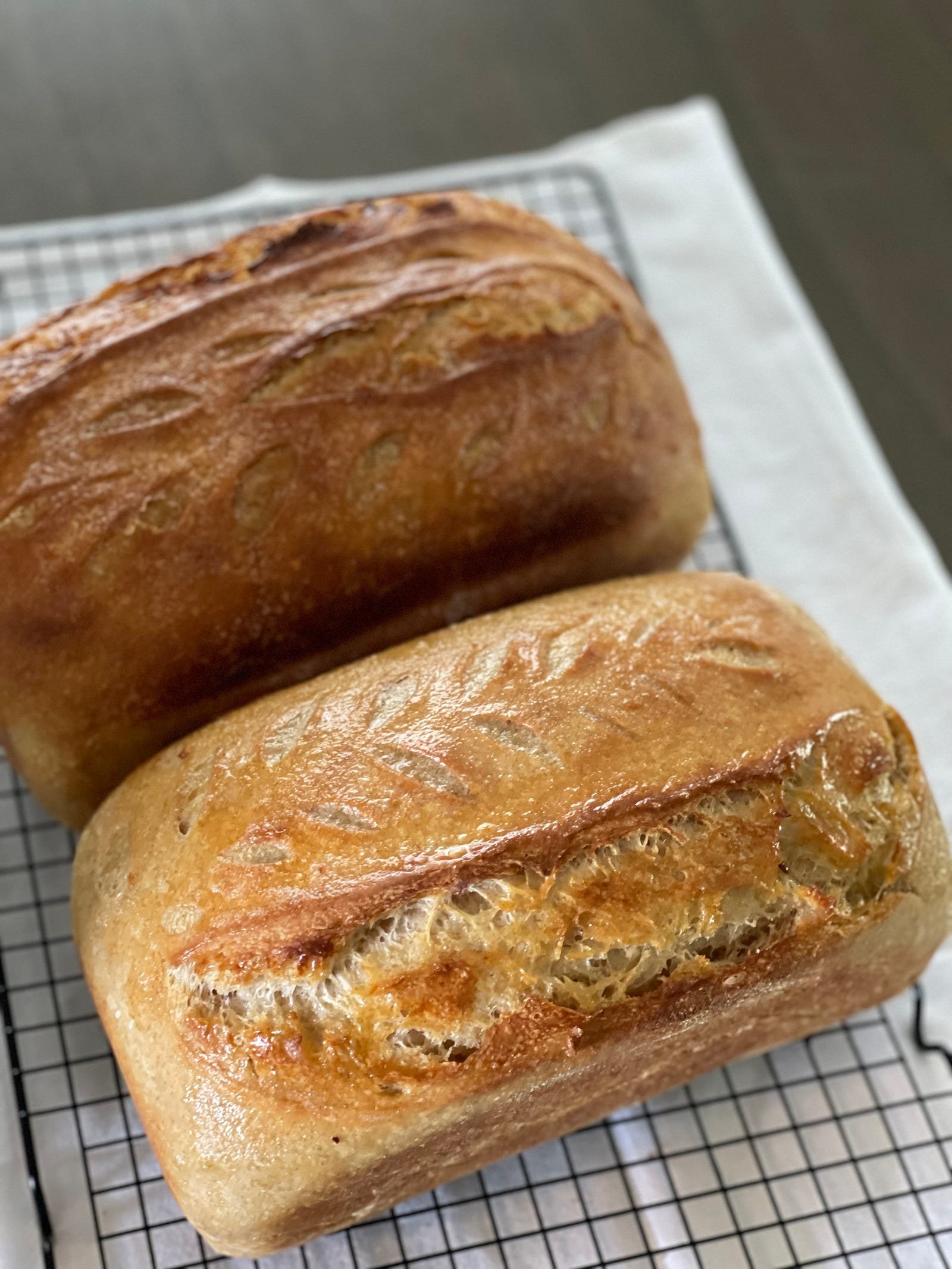
No Dutch Oven? Bake Soft Sourdough in a Loaf Pan
You do not need fancy equipment to bake beautiful homemade sourdough. A simple loaf pan works just fine.
This post may contain affiliate links. As an Amazon Associate, I earn from qualifying purchases. I only share products that support a simple, natural lifestyle.
For the longest time, I thought sourdough had to be baked in a Dutch oven to “count.”
You know the kind — the big crusty round loaf with the dramatic score down the middle, looking like it belongs on the cover of a rustic cookbook next to a linen napkin and a suspiciously perfect bowl of soup.
And yes, Dutch oven sourdough is beautiful.
But here is the thing.
You do not need a Dutch oven to bake good sourdough bread.
You can bake soft, simple, everyday sourdough in a regular loaf pan.
And honestly? For real life, that might be even better.
A loaf pan sourdough is sliceable. It is practical. It fits in the toaster without making you wrestle a bread slab the size of a dinner plate. It makes wonderful sandwiches, soft toast, buttered morning slices, and the kind of bread that quietly disappears from the counter one piece at a time.
No fancy equipment required.
Just a loaf pan, your sourdough dough, and a little willingness to let bread be bread without making it audition for a magazine cover.
Why Bake Sourdough in a Loaf Pan?
A Dutch oven is helpful because it traps steam and gives bread that crisp, artisan-style crust.
But a loaf pan does something different. You use another loaf pan as a lid and it also traps the steam.
It helps the dough hold its shape and encourages it to rise upward instead of spreading out. That makes it especially useful if you want a softer, more sandwich-style sourdough loaf.
A loaf pan is great if:
You are new to sourdough
You do not have a Dutch oven
Your dough feels a little too soft or relaxed
You want bread for sandwiches and toast
You prefer a softer crust
You like practical bread that fits your actual life
And that last part matters.
Not every loaf needs to be rustic and dramatic. Sometimes you just want bread that slices well, tastes good, and makes the kitchen smell like you are doing something deeply wholesome even if there are dishes in the sink and laundry having a small rebellion in the other room.
What Kind of Sourdough Works Best in a Loaf Pan?
A softer sourdough dough works beautifully in a loaf pan.
This can be a sandwich-style sourdough with a little honey, olive oil, butter, or milk added to the dough. Those ingredients help create a softer crumb and a tender crust.
But you can also use a basic sourdough dough and bake it in a loaf pan. The result will not be exactly the same as a round artisan loaf, but it will still be homemade sourdough bread — and that is not a small thing.
If your dough is especially high-hydration or sticky, the loaf pan can be your friend. It gives the bread structure and keeps it from spreading into what I lovingly call “sourdough pancake energy.”
We have all been humbled by dough at some point.
Basic Loaf Pan Sourdough Method
After your sourdough dough has gone through its first rise, gently turn it out onto a lightly floured surface.
A simple bench scrapercan be helpful here, especially if your dough is a little sticky or dramatic about leaving the counter.
Shape the dough into a log, keeping it gentle. You do not need to overwork it. Place it seam-side down into a greased or use a liner in the loaf pan.
Let the dough rise again until it looks puffy and has reached close to the top of the pan. This can go in the refridgerator overnight and pull out to bake in the morning. There is a simple and rooted living tip.
Place one pan on top of the other like a lid and then bake it until golden brown and fully cooked through.
Most loaf pan sourdough bakes well around 375–400°F for about 35–45 minutes, depending on your dough, oven, and pan size, after about 15 minutes remove the top pan and place back in over for remainder of cooking time. You can use a thermometor if you have one to check and the internal temperture should be over 200.
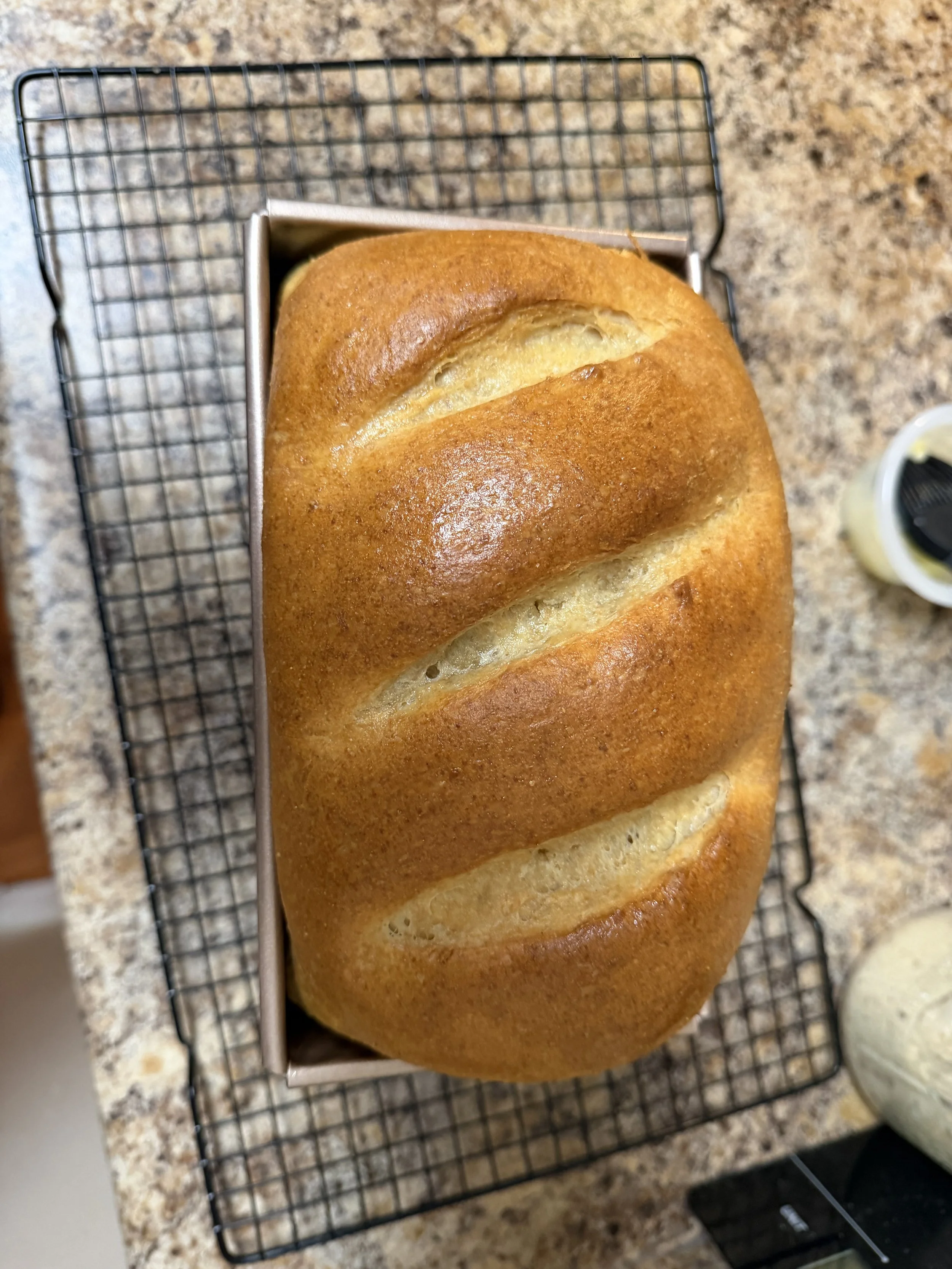
For a softer crust, brush the top with butter after baking. Let it cool on a wire cooling rack before slicing.
Or at least try to let it cool.
I am not here to pretend warm bread and butter do not have power over us.
Helpful Tips for Better Loaf Pan Sourdough
Do not overfill the pan
Give your dough room to rise. If the pan is too full, the loaf may spill over or bake unevenly.
Parchment is your friend or grease the pan well
A little butter, oil, or hands down my favorite method parchment or a loaf pan liner can save you from the heartbreak of beautiful bread stuck in the pan.
Let it rise until puffy
The second rise matters. You want the dough to look light and lifted before it goes into the oven.
Brush with butter for a softer crust
This is a simple step, but it makes the top crust softer and gives the loaf that cozy homemade finish.
Cool before slicing
Cooling helps the inside finish setting. If you slice too soon, the bread may be gummy.
That said, I fully understand the emotional pull of hot bread. Do with that information what you will.
Simple Tools That Help
You do not need a kitchen full of specialty tools to bake sourdough in a loaf pan. But a few basic items can make the process easier.
A sturdy loaf panis the main thing you need. I like a simple metal loaf pan because it helps the bread brown nicely and evenly.
A wire cooling rack helps air circulate around the loaf after baking so the bottom does not get soggy.
A good bread knife makes slicing much easier, especially if you want soft sandwich slices instead of bread pieces that look like they were cut during a small kitchen emergency.
And if you bake often, parchment paperor loaf pan liners can make cleanup and lifting the loaf out of the pan much simpler.
If you are still building your sourdough supplies, a kitchen scalecan also be helpful. Measuring by weight makes bread baking more consistent, especially when you are working with flour, water, and starter.
A large glass mixing bowlis another simple kitchen tool I use often for dough, rising, and keeping an eye on how much the dough has grown.
You can keep sourdough simple. You really can.
A loaf pan, a wire cooling rack, and a good bread knife are enough to make homemade bread feel doable.
Why This Method Feels More Real-Life Friendly
I love sourdough because it slows things down.
But I do not love when sourdough starts acting like it needs its own little throne, wardrobe, and emotional support schedule.
Loaf pan sourdough is the calmer cousin.
It is less dramatic. More useful. Easier to slice. Easier to serve. Easier to tuck into everyday life.
It is the kind of bread that works for toast in the morning, sandwiches at lunch, and thick slices with soup at supper.
It is not trying too hard.
And sometimes that is exactly what we need.
No Dutch Oven Required
If you have been waiting to try sourdough because you thought you needed more equipment, this is your gentle permission slip.
Start with what you have.
Use the loaf pan.
Bake the bread.
Let it be simple.
Homemade sourdough does not have to be perfect to be good. It does not have to be round, crusty, or picture-perfect to be worth making.
Sometimes the best loaf is the one that fits your real life.
Soft slices.
Warm kitchen.
Butter melting into the first piece.
No Dutch oven required.
Just flour, starter, time, and a little bit of courage.
And maybe a loaf pan that has officially earned its keep.