Buttermilk Biscuits with Fresh-Milled Flour
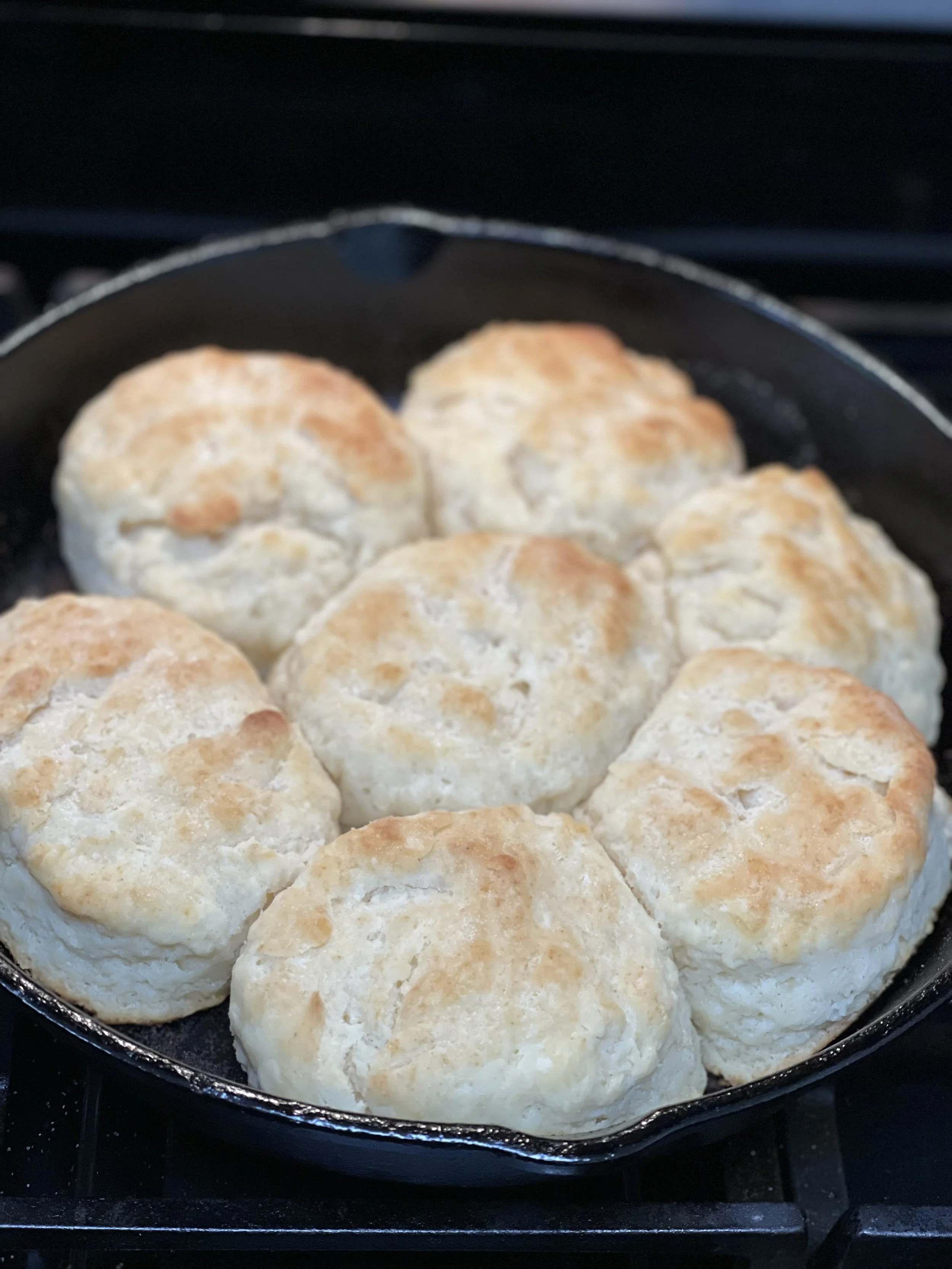
There are few things in this life that feel more comforting than a warm homemade biscuit.
Not a sad little biscuit from a can that pops open like it is trying to give you a heart attack. I mean a real biscuit. The kind with buttery layers, golden tops, soft middles, and enough personality to make you start planning sausage gravy before they are even out of the oven.
These buttermilk biscuits are made with mostly all-purpose flour and just enough fresh-milled flour to give them a cozy, nutty flavor without turning them into wheat bricks. Because listen, I love fresh-milled flour, but biscuits are not the place to prove how rustic we can be. We want tender. We want fluffy. We want “pass me another one” energy.
The fresh-milled flour adds flavor and a little old-fashioned goodness, while the buttermilk keeps everything soft and tender. They are perfect for breakfast, supper, or one of those “I made soup and now I need something buttery to drag through it” moments.
Why Add Fresh-Milled Flour to Biscuits?
Fresh-milled flour brings a richer flavor than plain white flour. It tastes nuttier, heartier, and a little more like something your grandma would have made if she also owned a grain mill and had Wi-Fi.
But fresh-milled flour can also absorb more liquid and make baked goods heavier if you use too much. That is why this recipe uses just a small amount. You get the flavor without losing the soft biscuit texture.
For biscuits, I like using soft white wheat if you have it. It keeps the biscuits lighter and more tender. Hard wheat can work too, but the biscuits will be a little more hearty and rustic.
And by rustic, I mean still delicious — not “we may need dental insurance” rustic.
Tips for Soft, Fluffy Biscuits
The first rule of biscuits is this: keep everything cold.
Cold butter is what creates those flaky layers. As the biscuits bake, the butter melts and releases steam, which helps lift the dough. That is biscuit science, which is my favorite kind of science because it ends with butter.
The second rule is do not overwork the dough. Biscuit dough does not need a full workout routine. Stir it gently, fold it a few times, and leave it alone. If you knead it like bread dough, the biscuits may get tough.
Biscuits are sensitive little things. Treat them gently, and they will reward you.
The third rule is to cut straight down. If you use a biscuit cutter or glass, press straight down without twisting. Twisting seals the edges and can keep the biscuits from rising well. I know it is tempting. We all want to twist. Resist the urge.
Buttermilk Biscuits with Fresh-Milled Flour
Ingredients
2 cups all-purpose flour
½ cup fresh-milled soft white wheat flour
1 tablespoon baking powder
½ teaspoon baking soda
1 teaspoon salt
1 tablespoon sugar, optional
½ cup cold butter, grated or cut into small cubes
1 cup cold buttermilk, plus 1–2 tablespoons more if needed
1 tablespoon melted butter, for brushing the tops
Instructions
Preheat your oven to 425°F.
In a large bowl, whisk together the all-purpose flour, fresh-milled flour, baking powder, baking soda, salt, and sugar.
Add the cold butter to the flour mixture. Use your fingers, a pastry cutter, or a fork to work the butter into the flour until the mixture looks like coarse crumbs with some pea-sized pieces of butter still showing.
Do not panic if it looks a little messy. Biscuit dough is not supposed to look polished. Honestly, if it looks too perfect, I start getting suspicious.
Pour in the cold buttermilk and gently stir until the dough just starts to come together. If the dough feels too dry, add another tablespoon or two of buttermilk. Fresh-milled flour likes to soak up liquid like it has been personally offended by dryness.
Turn the dough out onto a lightly floured surface.
Pat it into a rough rectangle, then fold the dough over itself 3–4 times. This helps create layers without overworking the dough.
Pat the dough out to about ¾-inch thick.
Cut the biscuits using a biscuit cutter or a glass. Press straight down without twisting.
Place the biscuits close together on a parchment-lined baking sheet or in a cast iron skillet. Keeping them close helps them rise up instead of spreading out.
Bake for 13–16 minutes, or until the tops are golden and the biscuits are baked through.
Brush the tops with melted butter as soon as they come out of the oven.
This step is not optional in my heart.
How to Serve These Biscuits
These biscuits are good with just about anything. Serve them warm with butter, honey, jam, apple butter, or sausage gravy.
They are also perfect beside soup, stew, garden vegetables, fried eggs, or a big Sunday breakfast. And if you split one open while it is still warm and eat it standing at the counter, that counts too. We call that quality control around here.
Fresh-Milled Flour Notes
If you are new to fresh-milled flour, start small. This recipe only uses ½ cup fresh-milled flour so the biscuits stay soft and fluffy.
Fresh-milled flour can vary depending on the grain you use and how finely it is milled. If your dough feels too dry, add a little extra buttermilk. If it feels too sticky, sprinkle in a small amount of flour while shaping.
You are not doing anything wrong. Fresh-milled flour just has opinions.
Storage
These biscuits are best eaten fresh and warm, but leftovers can be stored in an airtight container at room temperature for 1–2 days.
To reheat, warm them in the oven or toaster oven for a few minutes. You can also microwave them for a few seconds, but the oven gives them a better texture.
You can freeze baked biscuits, too. Let them cool completely, then place them in a freezer bag. Reheat straight from frozen in a 350°F oven until warm.
Final Thoughts
Homemade biscuits do not have to be complicated. You do not need a perfect kitchen, a spotless counter, or a grandmother looking over your shoulder telling you that you added too much flour.
You just need cold butter, cold buttermilk, a gentle hand, and a willingness to let the dough be a little imperfect.
These buttermilk biscuits with fresh-milled flour are soft, buttery, simple, and just rustic enough to feel special. They are the kind of recipe that belongs in a real kitchen — the kind with flour on the counter, dishes in the sink, and someone hovering nearby asking when they will be ready.
And honestly, that is my favorite kind of kitchen.
